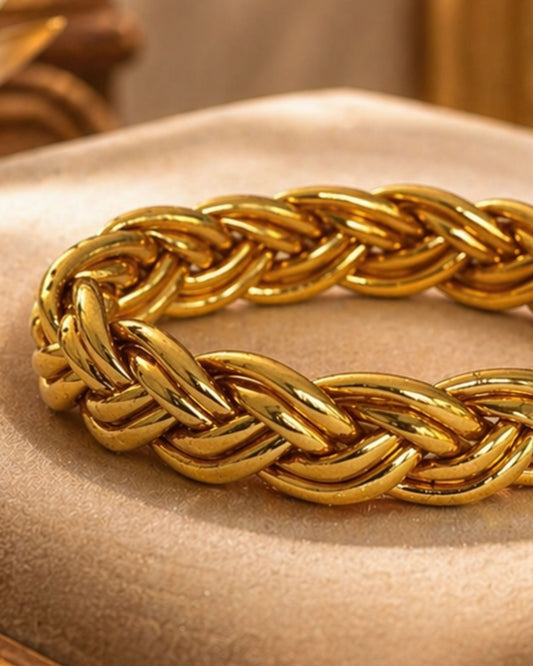
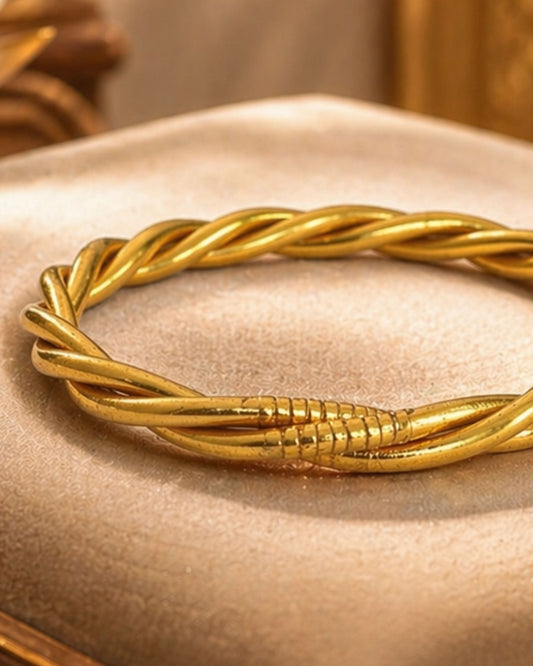
How to recognize a real buddhist bangle ?
More and more people are looking to find out how to recognize a real Buddhist bracelet. And that's normal: with the success of these bracelets, also known as kumlai, many models are now circulating without always presenting the same authenticity markers.
At Bâan Kumlaï, we believe that a credible bracelet is not recognized by a mere marketing promise. It is recognized by concrete signs, overall coherence, and the clarity of information provided before purchase.

In this article, you will discover which signs help identify an authentic Buddhist bracelet, how to distinguish a credible model from an imitation, which mistakes to avoid before buying, and how to judge if a product description or a store seems genuinely reliable.
Also discover: discover the Bâan Kumlaï Buddhist bracelet collection and what is a Buddhist bracelet?.
What signs help identify an authentic Buddhist bracelet?
An authentic Buddhist bracelet is not recognized by a single detail. Neither a color, nor a seductive visual, nor the word "authentic" alone is enough.
In practice, several markers must be observed simultaneously: the flexibility of the bracelet, its artisanal manufacturing in Thailand, the presence of real gold or silver leaves depending on the model, the brass piece engraved with a mantra, the blessing at the temple, as well as the clarity of the discourse held by the brand or store. It is the coherence of these elements that allows distinguishing a true kumlai from a bracelet merely inspired by this universe.
Concrete signs of authenticity to observe
A light and natural flexibility
The first marker is often flexibility. A credible bracelet does not give the impression of a rigid, heavy, or crude bangle. It appears more fluid, lighter, and more comfortable for daily wear.
Conversely, a model that is too hard, too thick, or visibly plastic should prompt you to examine the other criteria more carefully.

Real gold or silver leaves inside
One of the most important signs of an authentic Buddhist bracelet is the presence of real gold or silver leaves depending on the model. The inside of the bracelet should not give the impression of a simple glittery or artificial effect. It should reveal a finer, more subtle, and livelier material, with a less uniform finish than a decorative imitation.
In other words, what is seen inside should seem to be an integral part of the bracelet, and not just serve to create a flattering visual effect.
A brass piece, often engraved with a mantra
Another important marker: the brass piece that closes the bracelet, often engraved with a mantra. A mantra is a sacred or symbolic formula, traditionally associated with an intention, a prayer, or protective energy. On a credible model, this piece naturally integrates into the whole and fully participates in the bracelet's identity.
When this finish appears crude, disproportionate, or artificially added, it weakens the overall credibility of the jewelry.
Artisanal manufacturing in Thailand
A real Buddhist bracelet is handcrafted in Thailand, according to a traditional method. This point should not be treated as a mere marketing argument: it is one of the markers that give the bracelet its coherence, identity, and credibility.
To understand this topic in more detail, you can also read how Buddhist bracelets are made in Thailand.

A temple blessing that reinforces its traditional roots
The temple blessing is also one of the markers often associated with a true kumlai. It reinforces its traditional and spiritual dimension, without being sufficient on its own to prove the authenticity of the bracelet.
To delve deeper into this point without making this article too heavy, you can read the blessing ritual of Buddhist bracelets.
Clean finishes and clear presentation
A serious bracelet is also judged by its quality of finish. The tube should appear clean, the overall rendering harmonious, the closure regular, and the whole visually neat. Authenticity therefore does not rely solely on discourse: it is also seen in the precision of details and the impression of quality that emanates from the product.
A reputable store must also be able to explain what it sells, where the bracelet comes from, and what its concrete markers are. A vague origin, an unclear discourse, or overly superficial product descriptions should always alert you.
Real Buddhist bracelet or imitation: the differences that are truly visible
To the touch and when worn
An authentic model generally inspires a feeling of lightness and naturalness. An imitation is more likely to appear stiff, more plastic, or visually heavier.
In the interior rendering
A credible bracelet presents an interior that seems integrated into the jewelry. A copy more often gives a uniform, artificial, or purely decorative impression.
In the consistency of the product description
The difference is not only in the bracelet itself. It is also seen in the way it is presented: quality of photos, precision of explanations, consistency of discourse, clarity of information, and real specialization of the store.
Common mistakes to avoid before buying
Relying solely on color
A gold, silver, copper, champagne, or rose gold bracelet is not authentic because it uses a known shade in the kumlai universe. Color alone proves nothing.
Thinking that a marketing word is enough
The words authentic, genuine, traditional, or temple bracelet are not enough. What matters is the brand's ability to show concrete elements and maintain a consistent discourse from start to finish.
Confusing Thai inspiration with a real kumlai
Many bracelets can be inspired by Thailand, Buddhism, or a spiritual universe. This does not automatically make them real Buddhist bracelets.
Judging solely on price
A very low price can raise doubts, but a higher price does not guarantee authenticity either. The good reflex is to first check the visible criteria, then the quality of the presentation, and only then the price positioning.
How to check if a product description or store is credible?
Before buying, ask yourself these simple questions:
- Does the store clearly show the bracelet from several angles?
- Are the authenticity markers explained precisely?
- Is the origin of the bracelet presented clearly?
- Does the discourse remain consistent from one page to another?
- Does the site seem genuinely specialized, or does it mix this product with anything and everything?
A credible store does not need to overdo it. It reassures through precision, coherence, and clarity.
It is also this requirement that Bâan Kumlaï seeks to uphold through its product descriptions, visuals, and the way it presents each bracelet.
If you wish to delve deeper into the topic of choosing a specialized brand, you can read what is the best Buddhist bracelet brand.
FAQ: recognizing a real Buddhist bracelet
Can a real Buddhist bracelet be recognized from a photo?
Yes, in part. Good photos already allow observing the visual flexibility, the interior rendering, the closing piece, and the level of finish. These elements must then be cross-referenced with the quality of the explanations provided by the store.
Can a rigid Buddhist bracelet be authentic?
A certain stiffness is possible depending on the models, but a bracelet that appears too rigid, too thick, or too plastic should prompt you to check the other criteria more carefully.
Is the blessing enough to prove a bracelet is authentic?
No. The blessing can be part of the bracelet's universe, but it does not replace the material, visual criteria, and the overall coherence of its presentation.
Is a very cheap bracelet necessarily fake?
Not necessarily, but the price should never be read alone. What matters is the coherence between the bracelet, its finishes, its presentation, and the information given by the store.
In summary: the checklist for recognizing a real Buddhist bracelet
Before buying, always check these points:
- Does the bracelet appear flexible and light?
- Is it presented as being handcrafted in Thailand?
- Does it contain real gold or silver leaves depending on the models?
- Is the closing piece made of brass and consistent with the whole?
- Is the bracelet associated with a clearly explained temple blessing?
- Does the store explain precisely what it sells?
A real Buddhist bracelet is therefore not recognized by a simple stylistic effect. It is recognized by a set of concrete, visible, and coherent clues: its flexibility, its artisanal manufacturing in Thailand, its real precious leaves, its brass piece engraved with a mantra, its blessing at the temple, and the clarity of the information given by the brand. It is this demand that Bâan Kumlaï wishes to defend through its collection and its content.
To go further into the kumlai universe
- what size to choose for a Buddhist bracelet
- what color to choose for a Buddhist bracelet
- how many Buddhist bracelets to wear
Discover the Bâan Kumlaï collection

Do you want to discover models presented with clarity, coherence, and high standards? Explore the Bâan Kumlaï Buddhist bracelet collection and find the kumlai that suits you.