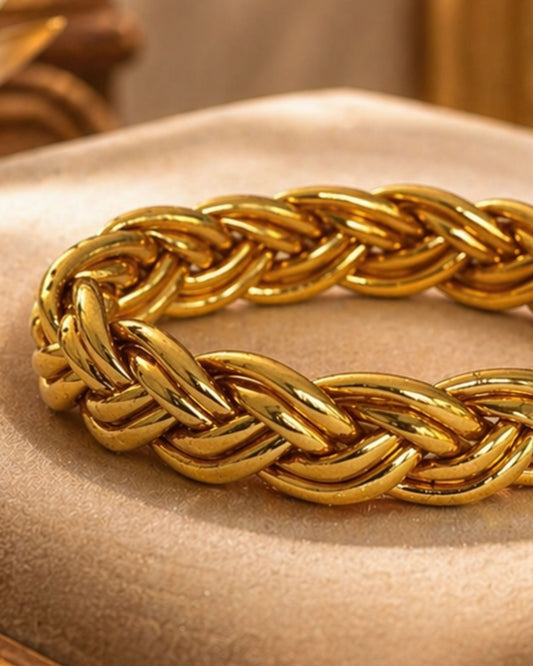
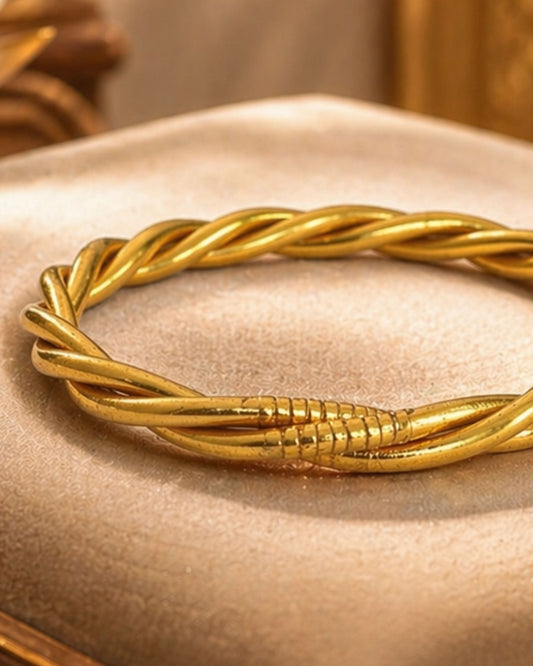
Rose Gold and Kumlai: Meaning, Softness, and Harmony

The rose gold color holds a special place in the world of Kumlai. Soft, luminous, and delicately warm, it often evokes tenderness, harmony, benevolence, and a form of emotional balance.
In a Buddhist bangle, this shade is not limited to a simple rose-gold finish. It brings a more intimate interpretation to the bracelet: that of a soothing presence, an emotional connection, and a softer energy than classic gold.
Softer than gold, warmer than silver, and more delicate than copper, rose gold captivates with its balance. It draws the eye without being excessive, subtly illuminates the wrist, and easily accompanies a personal intention in daily life.
In this article, we will explore the meaning of rose gold in the Kumlai universe: what it evokes, why it is often associated with softness, and how it can be worn as a symbol of harmony, tenderness, and delicate protection.
If you are still discovering this world, you can also read our guide What is a Buddhist bangle?.
What does the rose gold color symbolize in the Buddhist bangle universe?
The rose gold color is often associated with softness, femininity, benevolence, and peacefulness. It has a softer light than classic gold and a gentler warmth than coppery tones.
In the Kumlai universe, this shade can symbolize a quest for harmony, inner peace, and balance in relationships. It appeals to people who appreciate luminous jewelry but seek a more delicate, affectionate, and less ostentatious finish.
A color linked to softness and tenderness
Rose gold possesses a subtle warmth. Its hue evokes powdery shades, soft reflections, and jewelry chosen for its delicacy rather than its brilliance.
It is this softness that makes the rose gold color so special. It graces the wrist with elegance, without dominating the outfit, while still bringing a true personality to the bracelet.
A shade often associated with harmony
In a symbolic interpretation, rose gold often evokes harmony. Wearing this color can recall the desire to soothe tensions, cultivate benevolence, or keep a gentle and reassuring presence close.
A rose gold Kumlai can thus become a bracelet worn as much for its aesthetics as for what it inwardly represents: more calm, more tenderness, more balance.

Why does rose gold evoke peace and emotional balance?
The rose gold color has a very different visual energy from classic gold. It is luminous, but less sunny. Warm, but less assertive. It gives an impression of delicacy, calm, and intimacy.
In a Kumlai bracelet, this shade can take on a more personal dimension. It doesn't just speak of beauty or elegance: it can also symbolize a desire for softness, centering, and peacefulness in everyday life.
A luminous, yet delicate presence
Rose gold brings light without excess. Worn alone, it remains refined and discreet. In an accumulation, it softens stronger shades and creates a more tender harmony on the wrist.
It is this contrast that makes this color so appreciated: it has character, but it remains easy to wear, gentle on the eye, and naturally feminine.
A symbolism of connection and benevolence
In a more intimate interpretation, rose gold can be associated with connection, tenderness, and benevolence. It evokes power less than presence, brilliance less than attention.
Wearing a Kumlai in this shade can become a simple way to keep an intention close: taking care of one's balance, moving forward with gentleness, or cultivating a more peaceful energy.
What the rose gold color brings to a Buddhist bangle
The symbolism of a Kumlai does not come solely from its color. It is also part of a broader whole: its artisanal manufacturing, its flexible structure, the visible elements inside, the brass clasp, the mantra depending on the models, and the blessing in a Buddhist temple.
It is this coherence that distinguishes the Kumlai from a simple rose gold bracelet. The meaning comes from the shade, the object, its origin, and the intention that each person chooses to associate with it.
Artisanal manufacturing in Thailand
At Bâan Kumlaï, bracelets are handcrafted in Thailand according to the traditional method. This manufacturing gives the Kumlai its flexible, light, and luminous appearance.
The rose gold color thus fits into an object that already has a strong identity: a closed bracelet, comfortable to wear, designed to accompany daily life.
Silver leaves inside the bracelet
In the Bâan Kumlaï rose gold model, the shade comes from the outer color of the tube, while the inside reveals real silver leaves. This contrast contributes to its subtle brilliance and visual depth.
This detail gives the rose gold color all its richness: a soft, slightly changing light, which does not resemble a simple metallic pink bracelet.

A brass clasp and a mantra depending on the models
The Kumlai is closed by a brass piece that seals the bracelet. Depending on the models, this piece can be engraved with a mantra in Thai.
The mantra participates in the symbolic universe of the bracelet. It reinforces this impression of an object carrying meaning, chosen as much for its appearance as for the intention it accompanies.
A blessing in a Buddhist temple
Bâan Kumlaï bangles are blessed in a Buddhist temple in Thailand. This blessing gives the bracelet a different dimension from a simple fashion accessory.
To delve deeper into this topic, you can read our dedicated article: Buddhist bangle blessing ritual in Thailand.
Can rose gold be worn as a symbol of gentle protection?
Yes, this color can be worn with this intention. Its softness, subtle warmth, and visual balance naturally evoke a form of gentle protection, more delicate than demonstrative.
It is not a promise, but a symbolic interpretation. Some people wear their Kumlai as a discreet good luck charm, a reminder of peace, or a bracelet that accompanies a personal intention.
In this approach, the rose gold color can recall a simple idea: staying in softness, preserving one's balance, and moving forward with more serenity.
What intention to associate with a rose gold Kumlai?
Each person can associate their own intention with a symbolic bracelet. The rose gold color is particularly well suited to intentions related to tenderness, harmony, peaceful love, and emotional balance.
For example, you can wear this shade as a reminder to:
- cultivate softness, in your daily life;
- find a sense of peacefulness, during periods of movement;
- wear a luminous and delicate color, softer than classic gold;
- keep a personal symbol close, discreet and reassuring;
- accompany an intention of harmony, connection, or benevolence.
This intention remains personal. This is also what gives the Kumlai a special dimension: it can be worn as jewelry, but also as an intimate symbol.
With which colors to associate the symbolism of rose gold?
The rose gold color pairs very well with warm, luminous, and natural shades. It can be worn alone to retain all its softness, or combined with other colors to create a more personal accumulation.
With gold, it gains light. With copper, it becomes warmer and more enveloping. With silver, it creates a clearer and more delicate contrast. It also works very well with thin or twisted models, to add relief without losing its softness.
For a harmonious accumulation, you can combine it with a gold shade, a copper shade, or a silver shade.
In an accumulation, rose gold often acts as a connecting color. It softens stronger shades, illuminates warm colors, and gives an elegant coherence to the wrist.

Why are Buddhist bangles often worn in odd numbers?
In the world of Buddhist bangles, bracelets are often worn in odd numbers: 1, 3, 5, 7, or 9. This tradition gives the accumulation a more personal and symbolic dimension.
Wearing a single bracelet can evoke a simple and intimate intention. Three bangles can represent a balance. Five, seven, or nine can reinforce the idea of protective or lucky accumulation.
If this topic interests you, you can read our dedicated guide: Why wear Buddhist bangles in odd numbers?.
In summary: what does the rose gold color mean in the Buddhist bangle universe?
The rose gold color primarily evokes softness, tenderness, harmony, benevolence, and emotional balance. In the Kumlai universe, it can symbolize a soothing presence, an intention of gentle protection, or a desire to carry a more delicate energy close to oneself.
Worn on the wrist, this shade can accompany a personal intention: moving forward with gentleness, cultivating harmony, preserving one's balance, or choosing a luminous and reassuring color.
If this symbolism speaks to you, you can discover the Bâan Kumlaï rose gold model, handcrafted in Thailand, blessed at the temple, and shipped quickly from France.

FAQ: Meaning of rose gold color and Buddhist bangle
What does the rose gold color mean in a Buddhist bangle?
It evokes a soft, luminous, and soothing symbolism. In the Kumlai universe, this shade is often linked to tenderness, harmony, benevolence, and emotional balance.
Is rose gold associated with gentle protection?
Yes, it can be worn with this intention. Its warm and delicate hue often evokes gentle protection, but this meaning remains personal and symbolic.
What do the silver leaves represent in the rose gold model?
The silver leaves visible inside contribute to the subtle brilliance of the bracelet. They create luminous reflections and enhance the visual depth of the rose gold Kumlai.
Why do some people refer to it as "rose gold"?
"Rose gold" is simply another way to refer to the rose gold shade. In the Buddhist bangle universe, it refers to the same soft, luminous, and delicate finish.
With which colors to associate rose gold?
Rose gold pairs very well with gold, copper, silver, thin models, and twisted models. These associations create a soft, luminous, and balanced accumulation.
Why wear several Buddhist bangles in odd numbers?
Buddhist bangles are often worn in odd numbers, such as 1, 3, 5, 7, or 9. This tradition gives the accumulation a more symbolic and personal dimension.