How much does a Buddhist bracelet cost? All you need to know before buying

What is the price of a Buddhist bracelet? How much does a real kumlai cost? And most importantly, when does a price seem consistent... or, conversely, too low to be truly reassuring?
These are real purchasing questions. Because in the world of kumlai, price is not just about comparing bracelets. It also helps to understand what you are actually buying, what the store seriously showcases, and what a price can reveal about manufacturing, finishes, and the overall level of credibility.
If you are looking for a clear, reliable, and useful price benchmark before buying a Buddhist bracelet, the goal of this page is simple: to give you a real reference point. Not to seek the cheapest at all costs, but to distinguish a credible price from a deceptive price, one that is too vague or difficult to justify.
If you already want to see the models and their prices, you can explore the Bâan Kumlaï Buddhist bracelet collection. And if you're still hesitating, this guide will help you interpret prices with more perspective, clarity, and confidence.
What is the price of a Buddhist bracelet?
In practice, the price of a Buddhist bracelet can fall into three main categories.
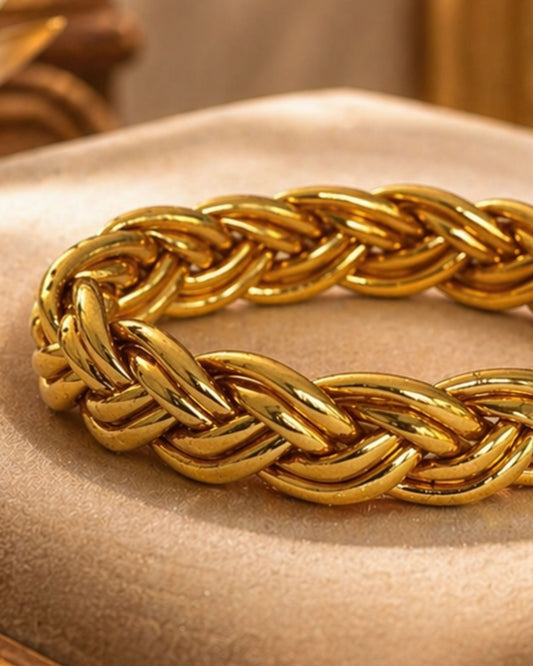
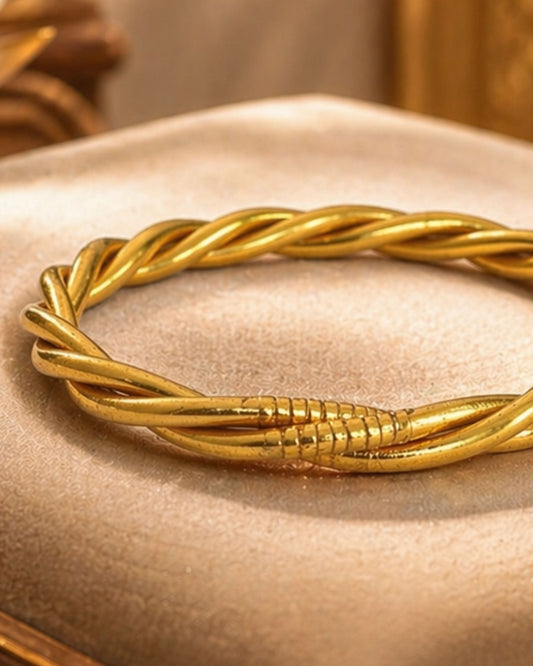
The most affordable models sometimes appear around €12 to €15. Then there's a very common range, often more consistent for a well-presented bracelet, around €16 to €18 for a simple or thin model. Finally, more elaborate models, such as some twisted or double-twisted ones, regularly go above €20, sometimes around €24 to €29 depending on the brand's positioning.
These price benchmarks are not absolute rules. But they already allow us to answer the question of how much a Buddhist bracelet costs with more precision. The right approach is not to focus on a single figure. The right approach is to see if the price seems logical in relation to the promise.
Price of a real Buddhist bracelet: what to expect?
The price of a real Buddhist bracelet is not read like that of a generic fashion bracelet. You must take into account the model, the presentation, the level of selection, the consistency of manufacturing, and the overall seriousness of the store.
A price may therefore seem higher than another without being excessive. Conversely, a very attractive price is not necessarily a good deal if it is not supported by credible benchmarks.
In other words, the price of an authentic Buddhist bracelet does not only depend on the bracelet itself. It also depends on everything that helps to understand this bracelet, identify it correctly, and buy it with confidence.
Low price, consistent price, premium price: how to find your way?
A very low price
A very low price is not automatically proof of a bad product. However, it deserves careful consideration. The more a store promises a genuine kumlai made in Thailand using traditional methods, with a clear selection process and precise details, the more an unusually low price should raise questions.
A consistent price
A consistent price is one that appears aligned with what is actually shown and explained: type of model, visual quality, regularity of finish, level of transparency regarding manufacturing, presence of distinctive details, assistance with choice, seriousness of the website and service.
A premium price
A higher price can be perfectly legitimate when it corresponds to a more elaborate model, a more structured brand universe, a more rigorous selection, a better quality of presentation, or a more reassuring purchasing experience. A premium price only makes sense if it is based on concrete, visible, and understandable elements.

Why do Buddhist bracelet prices vary so much?
The type of model
The first factor is often the model itself. A classic bracelet, a thin bracelet, and a twisted bracelet are not always priced at the same level. The simplest versions are often the most affordable. Twisted, double-twisted, or more visually elaborate models are generally higher priced.
When asking how much a Buddhist bracelet costs, it is therefore necessary to first identify what type of model is actually being discussed.
The manufacturing logic
Manufacturing also plays an obvious role in the price level. We will not go into all the details of authenticity or the manufacturing process here: these topics have their dedicated pages. However, they are fully relevant when they help to understand why a price is credible.
When a bracelet is presented as made in Thailand using traditional methods, it creates a certain level of expectation. This is not just a decorative phrase. It implies consistency in sourcing, selection, and presentation. If you want to delve deeper into this point, you can read how Buddhist bracelets are made in Thailand.
The finishing elements
The price of an authentic Buddhist bracelet can also vary depending on the quality of the finish and the distinctive details of the bracelet. Depending on the models, one may find genuine gold or silver leaf, a brass piece engraved with a mantra, a clearer presentation of details, better visual regularity, or a more obvious consistency between the store's discourse and the product shown.
These elements should not be looked at separately, as a simple technical list. They primarily serve to understand whether the asking price seems justified.
The level of seriousness of the shop
A reputable shop doesn't just sell a bracelet. It also provides a framework of trust. This includes clear information, quality visuals, legible sizing, consistent descriptions, the ability to explain the differences between models, attention to the brand, and, in some cases, shipping from France.
All of this alone is not enough to justify a price. But all of this contributes to making the price more credible than a simple isolated "low price."
From what price should one start to be wary?
There is no universal threshold. But there is a simple principle: the stronger the promise of authenticity, the less consistent a very low price appears.
If a bracelet is presented as a genuine kumlai, made in Thailand using traditional methods, with precise details, a beautiful finish, a brass piece engraved with a mantra, the presence of gold or silver leaf depending on the models, a blessing in a temple, and a serious presentation, then an abnormally low price should raise a red flag.
Again, this is not about judging blindly or systematically accusing. But in this sector, a price that is too low is rarely consistent with a complete and credible promise. It may reveal an imitation, manufacturing far from expected standards, very average quality, vague sourcing, or storytelling stronger than the reality of the product.

How to know if the price of an authentic Buddhist bracelet is fair?
To intelligently assess a price, you need to look at several signals simultaneously.
1. Does the shop clearly explain what it sells?
A reliable store doesn't just string together the words "authentic," "Thai," or "lucky charm." It provides context. It explains what truly distinguishes its models and why its pricing is logical.
2. Is the model clearly identified?
If the bracelet is presented as classic, thin, or twisted, with clear visuals and a legible collection structure, the price becomes more understandable. Conversely, a poorly documented product inspires less confidence, even if it seems attractive.
3. Are the authenticity markers visible and consistent?
On this point, the goal is not to redo a complete authenticity guide here. But it is important to check that the store shows elements clear enough to justify the price. If you wish to delve deeper into this topic, you can read how to recognize a true Buddhist bracelet.
4. Does the brand seem specialized?
The asking price appears more credible when it is part of a truly specialized universe, with a clear vision of the models, a coherent editorial logic, useful explanations, and a real understanding of the product. This is also why the choice of brand matters. If you want to delve deeper into this point, you can read our article on choosing a reputable Buddhist bracelet brand.
What you really pay for when you buy a real kumlai
When you buy a kumlai at a consistent price, you're not just paying for a flexible, lightweight bracelet to wear every day. You're also paying for a clearer understanding of the product, safer selection, a more reassuring level of finish, a more credible presentation, and often a more structured shopping experience.
So you're paying for the bracelet itself, its model, its level of detail, the consistency of its positioning, and the trust the store inspires. This is precisely why a slightly higher price can sometimes be more reassuring than a very low price that is difficult to explain.
At Bâan Kumlaï, our understanding of fair pricing
At Bâan Kumlaï, we don't believe that a good price is necessarily the lowest. We believe that a good price is a price that is clear, consistent, and justified.
Our Buddhist bracelets are made in Thailand using traditional methods. Depending on the models, they contain genuine gold or silver leaf, feature a brass piece engraved with a visible mantra, and are then blessed in a temple. We also place particular importance on the legibility of the collection, the choice of models, the quality of presentation, and shipping from France.
At Bâan Kumlaï, pricing is also designed for accumulation. Since these bracelets are often worn alone or in odd numbers, the unit price becomes more advantageous when purchasing 3, then 5, 7, and 9 bracelets. This makes it easier to create a harmonious accumulation, consistent with the spirit of kumlai, without deviating from a premium and reassuring positioning.
If you want to see the models and get a better sense of the price levels, you can discover the main collection of Bâan Kumlaï Buddhist bracelets.
In summary
If you're wondering what the price of a Buddhist bracelet is, the most useful answer isn't a single number. It's about price benchmarks to interpret intelligently, considering the model, the quality of presentation, the consistency of manufacturing, visible details, and the seriousness of the shop.
If you're wondering how much an authentic Buddhist bracelet costs, remember this above all: a price that is too low should raise a red flag, a consistent price is reassuring, and a higher price can be perfectly legitimate if it is based on concrete and credible elements.
And if you are looking for a kumlai bracelet in a clear, specialized, and demanding universe, you can discover the selection of Bâan Kumlaï Buddhist bracelets and compare the models according to your style, your desire for accumulation, and your price point.