How are Buddhist bangles bracelets made in Thailand?

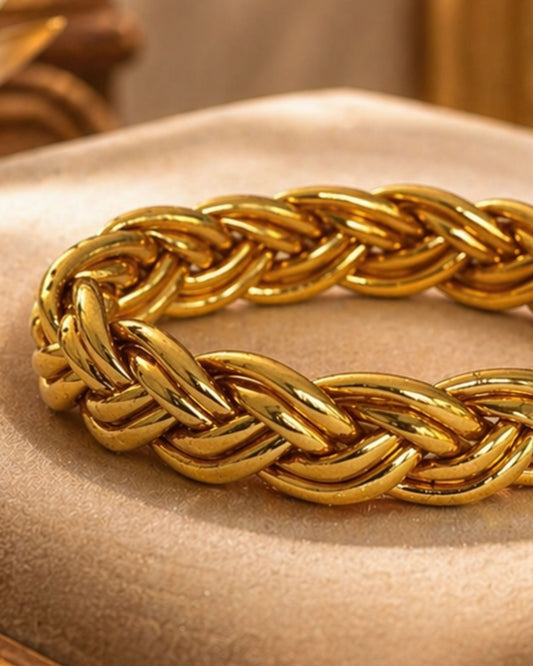
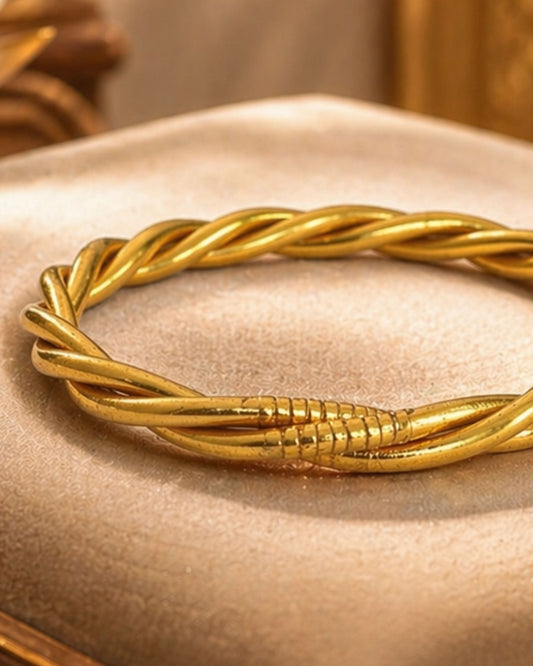
Buddhist bangles, also known as kumlai, are distinguished by an instantly recognizable appearance: a flexible, lightweight, luminous bracelet, the interior of which reveals very distinctive metallic reflections. Behind this unique look is a Thai artisanal craftsmanship.
So, how are Buddhist bangles made in Thailand? Their manufacturing relies on a precise process: a flexible and transparent structure, real gold leaves or real silver leaves depending on the color of the bracelet, a sacred oil present inside, and then a brass clasp visible through the transparency, sometimes engraved depending on the models. It is this combination that gives the bracelet its flexibility, lightness, inner light, and identity.
If you wish to discover our models first, you can view the Bâan Kumlaï Buddhist Bangle collection.
The making of a Buddhist Bangle: Thai Artisanal Craftsmanship

An authentic Buddhist bangle is not just about a simple gold or silver color. What gives it its personality is how it is made. In the world of kumlai, artisanal manufacturing is not a mere detail: it directly influences the look of the bracelet, its flexibility, its lightness, and its consistency with Thai tradition.
At Bâan Kumlaï, our models are handcrafted in Thailand. All our bracelets contain either real gold leaves or real silver leaves, depending on the color of the bracelet. They are also sealed with a brass clasp visible through the transparency, with some models engraved with a Thai mantra.
In other words, understanding how Buddhist bangles are made in Thailand helps to understand why this bracelet does not have the same look as a simple accessory inspired by this universe.
What elements go into making a Buddhist bangle?
The artisanal manufacturing of Buddhist bangles relies on several simple elements, but their assembly requires precision:
- a flexible and transparent structure, which forms the base of the bracelet;
- real gold leaves or real silver leaves, depending on the color of the model;
- a sacred oil, present inside as part of the manufacturing process;
- a brass clasp, visible through the transparency, which seals the bracelet;
- a process of shaping, assembly, and finishing, which results in a regular, flexible, and comfortable bangle to wear.
It is this combination that gives the Buddhist bangle its distinctive appearance. The leaves inside create the reflections, light, and depth of the bracelet. Depending on the color of the model, these are real gold leaves or real silver leaves. The sacred oil aids their insertion into the flexible structure, while the brass clasp, visible through the transparency, contributes to the finish and identity of the bracelet.
For a more general presentation of the bracelet and its universe, you can also read our article What is a Buddhist Bangle?.
The main stages of Buddhist Bangle manufacturing
1. Preparation of the flexible and transparent structure
The first step is to prepare the base of the bracelet. The kumlai relies on a flexible and transparent structure, chosen for its flexibility and its ability to reveal the interior composition. This base is essential: it is what allows the bracelet to be lightweight, silent, and comfortable for daily wear.
A well-designed bangle must retain some flexibility without losing its shape. This step therefore influences both the comfort of the bracelet and the elegance of its line.
2. Insertion of real gold or silver leaves

Next comes the integration of the elements that give the bracelet its light and visual identity. All models contain either real gold leaves or real silver leaves, depending on the color of the bracelet. These are what can be seen inside the bangle, through the transparency.
These leaves do not just create a beautiful visual effect. They contribute to the final look of the bracelet: they bring reflections, depth, and a more nuanced sparkle than a simple uniformly shiny bracelet. This is one of the reasons why a Buddhist bangle handcrafted in Thailand often has a more subtle and vibrant appearance.
3. Sacred oil, present at the heart of the process
The making of a kumlai also includes the presence of a sacred oil inside the bracelet. This oil is part of the manufacturing process: it accompanies the insertion of the gold or silver leaves into the flexible and transparent structure and contributes to the internal balance of the bangle.
On a page dedicated to manufacturing, it is important to speak clearly about it. It is not an anecdotal detail: this oil is part of the reality of the bracelet. This can also explain why a new model sometimes seems slightly oily upon receipt. This aspect is directly related to its manufacture, and not to a defect.
4. Sealing with a brass clasp visible through transparency

Each bracelet is then sealed with a brass clasp, visible through the transparency inside the bangle. This clasp is one of the distinctive elements of the kumlai: it contributes to the finish of the bracelet, its visual balance, and its identity.
Depending on the models, this clasp can be engraved with a mantra in Thai. The words found then are Love and Luck. On a page dedicated to manufacturing, the essential thing to remember is that this clasp is not a randomly added detail: it is an integral part of the bracelet's construction.
5. Final assembly and finishing
The last step is to carefully finalize the whole. The quality of a kumlai is largely evident in its finish: the interior of the bracelet must remain harmonious, the visual perception must be clean, and the overall piece must maintain good regularity.
When trying to understand how Buddhist bangles are made, one must therefore look at the bracelet as a whole: structure, precious leaves, sacred oil, brass clasp, and finishing all work together.
How this manufacturing influences the flexibility, lightness, and appearance of the bracelet
Artisanal manufacturing is not just about telling a story. It has very concrete consequences on the bracelet itself.
- Flexibility comes from the chosen structure and how the bangle is assembled.
- Lightness is due to its design and the balance of its components.
- Inner light comes from the presence of real gold or real silver leaves.
- The bracelet's personality is evident in its finish, its visual balance, and the presence of the brass clasp, sometimes engraved depending on the models.
It is precisely for this reason that a bracelet made with an artisanal approach does not give the same impression as a rigid, uniformly shiny, or purely decorative bracelet. Even without being an expert, one often perceives the difference in the overall appearance: a well-made kumlai seems more subtle, more vibrant, and more coherent.
What manufacturing details distinguish an artisanal kumlai?
This page is not intended to be a comprehensive guide to authenticity, but certain manufacturing details are very revealing. When a bracelet is carefully made, several elements immediately influence one's perception of it:
- a flexible structure that is comfortable to wear;
- a visible internal composition, not just a surface effect;
- the presence of real gold or silver leaves depending on the model;
- a brass clasp visible through transparency, well integrated into the bracelet;
- a coherent finish, without an artificial look or impression of crude filling;
- a general harmony between the material, the inner light, and the shape of the bangle.
In other words, the artisanal manufacturing of Buddhist bangles is reflected in the final result. This explains why an artisanal kumlai does not have the same appearance as a more generic bracelet, even when the silhouette seems similar at first glance.
If you wish to delve deeper into the criteria of authenticity, you can read our dedicated guide: How to recognize a true Buddhist bangle?.
What elements influence the final appearance of a Buddhist bangle?
In the world of kumlai, certain elements constantly reappear because they truly structure the bracelet: real gold or silver leaves, the sacred oil present inside, the brass clasp visible through transparency, the flexibility of the structure, and the quality of the finish. These are what give the bangle its visual identity.
On a page dedicated to manufacturing, the most important thing is to remain concrete: these elements matter primarily because they contribute to the construction of the bracelet. They influence its inner light, its regularity, its visual finesse, and its personality when worn.
At Bâan Kumlaï, we choose to present these elements with sobriety. The manufacturing explains the material, the shape, the appearance, and the coherence of the bracelet. The dimension related to the mantra and blessing exists in this universe, but it deserves to be treated separately to remain clear and well understood.
If this topic interests you, you can also read our article on the blessing of Buddhist bangles at the temple.
Manufacturing at Bâan Kumlaï
At Bâan Kumlaï, we attach great importance to the consistency between the origin, manufacturing method, and final appearance of the bracelet. Our kumlai are handcrafted in Thailand, with particular attention paid to the flexibility of the bangle, the interior composition, the presence of sacred oil, and the quality of the finish.
This requirement is part of our approach to kumlai: not just as a simple accessory, but as a bracelet whose manufacturing genuinely matters. If you wish to discover the brand's universe, you can also read our article True Thai Buddhist bangle: The story of Bâan Kumlaï.

Frequently Asked Questions about Buddhist Bangle Manufacturing
What are Buddhist bangles made of?
They are based on a flexible and transparent structure, inside of which there are either real gold leaves or real silver leaves, depending on the color of the bracelet. A sacred oil is also present inside as part of the manufacturing process. Each model is then sealed with a brass clasp visible through the transparency, sometimes engraved depending on the models.
Why are Buddhist bangles sometimes slightly oily upon receipt?
This can be due to the presence of sacred oil inside the bracelet. This oil is part of the manufacturing process and can give, on some new models, a slight oily sensation upon receipt.
What is the role of gold or silver leaves in a kumlai?
They contribute to the interior appearance of the bracelet. They create the reflections, depth, and particular sparkle observed through the transparent structure.
Is the brass clasp part of the manufacturing?
Yes. All bracelets are sealed with a brass clasp, visible through transparency. Depending on the models, this clasp can also be engraved with a Thai mantra with the words Love and Luck.
Why does manufacturing influence the appearance of the bracelet so much?
Because it determines the flexibility of the bangle, the quality of the finish, the readability of the interior composition, and the overall harmony of the bracelet.
In summary
To simply answer the question how are Buddhist bangles made, we can say this: they are artisanal bracelets made in Thailand, from a flexible and transparent structure, containing either real gold leaves or real silver leaves depending on the color of the model, as well as a sacred oil present inside the bracelet, then sealed with a brass clasp visible through transparency, sometimes engraved depending on the models with a Thai mantra.
It is this manufacturing that gives the kumlai its flexibility, lightness, inner glow, and personality. And that is also why the making of a Buddhist bangle remains one of the best angles to understand what makes a true Buddhist bangle or a genuine kumlai unique.
You can now discover our Bâan Kumlaï Buddhist bangles and find models handcrafted in Thailand.