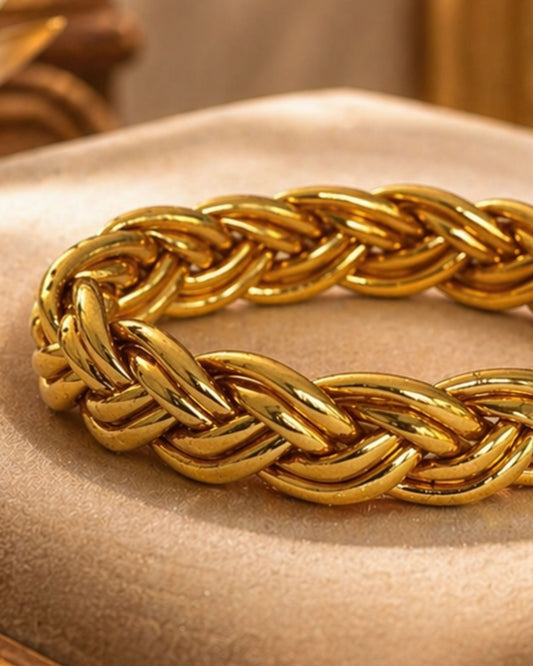
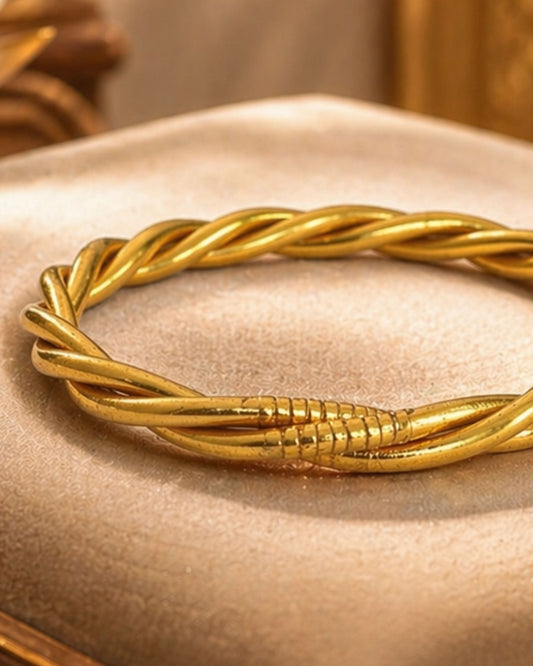
Can a Buddhist bracelet be worn by a non-Buddhist?

The question often arises, and it is perfectly legitimate: do you have to be a Buddhist to wear a blessed Buddhist bracelet?
The most accurate answer is simple: no, a blessed Buddhist bracelet is not exclusively for Buddhists. Many women and men choose to wear one without practicing Buddhism, simply because they are touched by its history, aesthetics, symbolism, or the sense of calm they associate with it in their daily lives.
In reality, the essential point is not to belong to a specific religious affiliation. What truly matters is how you approach this piece of jewelry: with accuracy, sincerity, and without distorting what it represents.
If you wish to discover the available models in this spirit, you can already view the Bâan Kumlaï Buddhist bracelet collection.
Do you have to be Buddhist to wear a blessed Buddhist bracelet?
No. The fact that a bracelet has been blessed does not mean it is reserved for a closed religious circle. A blessed Buddhist bracelet can be worn by a Buddhist person, but also by someone who is not.
This type of jewelry is often chosen for several reasons at once: its elegance, lightness, its connection to a Thai tradition, or the symbolic dimension it evokes. For many, wearing it is not a way to claim a religion, but rather to keep close an object full of meaning.
In other words, wearing a Buddhist bracelet without being Buddhist is not contradictory. The real difference lies more in the intention and the perspective one has towards it.

What truly matters: respect more than religious affiliation
The real question is therefore not just whether it "is allowed" to wear this bracelet. It is rather about asking yourself what state of mind you choose and wear it in.
A blessed Buddhist bracelet is not an object forbidden to non-Buddhists. However, it deserves to be approached with delicacy, because it is part of a real cultural and spiritual tradition. It is precisely this nuance that is most reassuring.
Respect, personal sensitivity, and cultural appropriation: where is the balance?
Many people hesitate not because of the bracelet itself, but because they wonder if it might be inappropriate. This caution is healthy. It shows a desire to do things right.
In fact, the question is not just: "Do I have the right?" It rather becomes: Am I wearing it with a sincere and respectful approach?
Wearing traditional jewelry with respect
Wearing a Buddhist bracelet with respect is not claiming to belong to a religion that is not your own. It is not playing a role, nor transforming a traditional object into an exotic caricature.
On the contrary, it is recognizing that it comes from a specific cultural universe, and choosing to welcome it with simplicity. One can be sensitive to its beauty, its history, or what it evokes internally, without claiming to be Buddhist.
The difference between appropriation and sincere sensitivity
The topic of cultural appropriation can cause hesitation, and that is understandable. However, one must distinguish a sincere approach from a superficial, ironic, or purely decorative use, with no regard for the bracelet's origin.
Choosing a bracelet because you appreciate its symbolism, its tradition, or the serenity you like to associate with it has nothing to do with reducing it to a mere "trendy spiritual object." Personal intention plays a central role here.
Also accept everyone's sensitivity
Some people immediately feel comfortable with the idea of wearing a blessed bracelet without being Buddhist. Others prefer to take more distance before choosing it. Both positions are understandable.
The essential thing is not to wear it in confusion. If you choose it with esteem for what it represents, without mockery and without artificial religious claims, the approach is already much fairer.
What changes the fact that a bracelet is blessed?
The word blessing can be impressive. Some people wonder if a blessed Buddhist bracelet becomes, by this simple fact, an object that should necessarily be understood from a religious perspective before being able to wear it.
In practice, the blessing does not transform the bracelet into a reserved object. It primarily adds a symbolic dimension. For many, this reinforces the idea of intention, inner peace, protection, or connection to a living tradition. But it does not, by itself, impose a formal religious adherence.
One can therefore respect this blessing without over-interpreting it. It is part of the bracelet's history and contributes to its depth, without requiring the person wearing it to be Buddhist.
If you wish to better understand this dimension, you can also read our article on the blessing of the Buddhist bracelet.

Why do non-Buddhists choose to wear a kumlai?
Many non-Buddhists today choose to wear a kumlai for very simple, often personal, and rarely dogmatic reasons.
- For its symbolism: some like to wear an object that evokes serenity, intention, or a personal landmark in daily life.
- For its elegance: the Buddhist bracelet also appeals with its finesse, lightness, and ease of wear.
- For its history: knowing that it is part of a Thai tradition gives the jewelry a depth that many seek.
- For what it internally accompanies: without speaking of promises, some people like to associate this bracelet with a period of life, an intention, or a more personal search for balance.
At Bâan Kumlaï, it is precisely this nuanced approach that we wish to defend: a piece of jewelry that can be chosen for what it represents, without excessive discourse, without confusion, and without reducing its meaning to a simple trend.

How to wear a blessed Buddhist bracelet appropriately when you are not Buddhist?
There are no rigid rules to follow, but a few simple guidelines can help you feel more legitimate and at peace with your choice.
- Choose it for good reasons: because it touches you, soothes you, genuinely pleases you, or corresponds to a personal sensibility.
- Avoid caricature: it is better not to transform this piece of jewelry into a meaningless "mystical" accessory or a symbol worn solely for image.
- Respect its origin: recognize that it comes from a specific tradition and is not just a bracelet without history.
- Allow room for your feelings: it is possible to love this bracelet for its symbolic significance, without overdoing it.
This approach allows one to move away from a binary logic of "I have the right / I don't have the right." The real question then becomes: Am I wearing it with consistency and delicacy? Very often, the answer lies in this simplicity.
Do you have to believe in its symbolism to wear it?
Not necessarily. Some people are very sensitive to the symbolic significance of the Buddhist bracelet; others primarily see it as a refined piece of jewelry, laden with a beautiful history or personal intention.
One can therefore wear it with respect without adhering to an overly assertive discourse. The essential thing is not to reduce it to a simple meaningless accessory.
If you first want to understand what this type of jewelry is exactly, you can read our article What is a Buddhist bracelet?.
In summary
Yes, you can wear a blessed Buddhist bracelet without being Buddhist. This piece of jewelry is not reserved for a strict religious affiliation. However, it deserves to be chosen with respect, with a simple understanding of what it represents, and without awkward posturing.
The fact that it is blessed adds a symbolic dimension, but does not require adherence to a religion to wear it. Many non-Buddhists choose this type of bracelet for its beauty, its gentleness, its history, or the personal intention they like to associate with it.
If you are looking for a model with this approach, both elegant, respectful and consistent with the world of Bâan Kumlaï, you can discover the collection of Buddhist bracelets.
Frequently Asked Questions
Can you wear a blessed Buddhist bracelet without being Buddhist?
Yes. The fact that a bracelet is blessed does not mean it is reserved only for Buddhist people. It can be worn by anyone who approaches it with sincerity and respect.
Is it disrespectful to wear a Buddhist bracelet if you are not Buddhist?
Not in itself. What could be clumsy would be to wear it in derision, in caricature, or without any regard for what it represents. In a simple and respectful approach, there is nothing inconsistent.
Does the fact that it is blessed change anything?
Yes, in the sense that it reinforces its symbolic significance and its connection to a tradition. No, in the sense that it does not oblige you to belong to a religion to wear it.
Do you have to believe in its benefits to wear it?
No. Some people attach strong symbolism to it, others do not. You can wear a Buddhist bracelet for its history, meaning, or aesthetic, without adhering to excessive discourse. If you wish to delve deeper into this point, you can also read our article on the benefits often associated with Buddhist bracelets.
How to go further before choosing your bracelet?
To go further, you can discover our article on blessing, read our guide on the Buddhist bracelet, or directly see the available models.